
9K, 14K or 18K? The Everyday Gold Guide
Maanorah Team
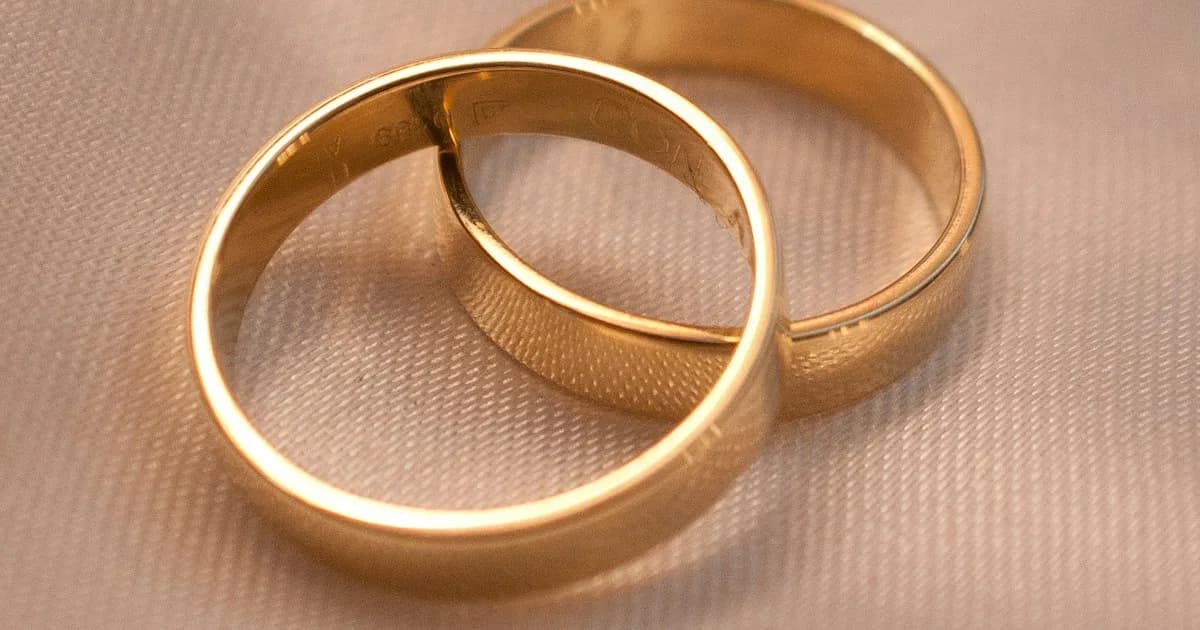
Your everyday jewellery has a busy life. It types on laptops, holds the steering wheel, gets washed with your hands and comes along to the gym. The gold you choose decides how it handles all that, how it looks, and what it costs.
Every purity we offer is suitable for daily wear. The only question is which one suits you.
The quick answer
- 9K (37.5% gold): the toughest and most affordable, with a soft, subtle gold colour.
- 14K (58.5% gold): strong, warm and well priced. The favourite for everyday jewellery.
- 18K (75% gold): the richest, deepest gold colour, for pieces you want to glow.
All three are BIS hallmarked. The hallmark shows the BIS mark, the purity (9K375, 14K585 or 18K750) and a six-digit HUID that you can check in the BIS CARE app.
Why is 9K the toughest?
Pure gold is very soft. Jewellery gold is blended with other metals such as silver, copper and zinc, and those make it harder. 9K has the most of them, so it shrugs off scratches and dents best. 18K has the least, so it is a little softer and shows fine marks sooner.
What does the same design cost in each purity?
For the same design, the gold part costs about 40% less in 9K than in 14K, and about 50% more in 18K. That is because purity changes the weight as well as the gold content. Higher-karat gold is denser, so the same design weighs more in 18K and less in 9K.
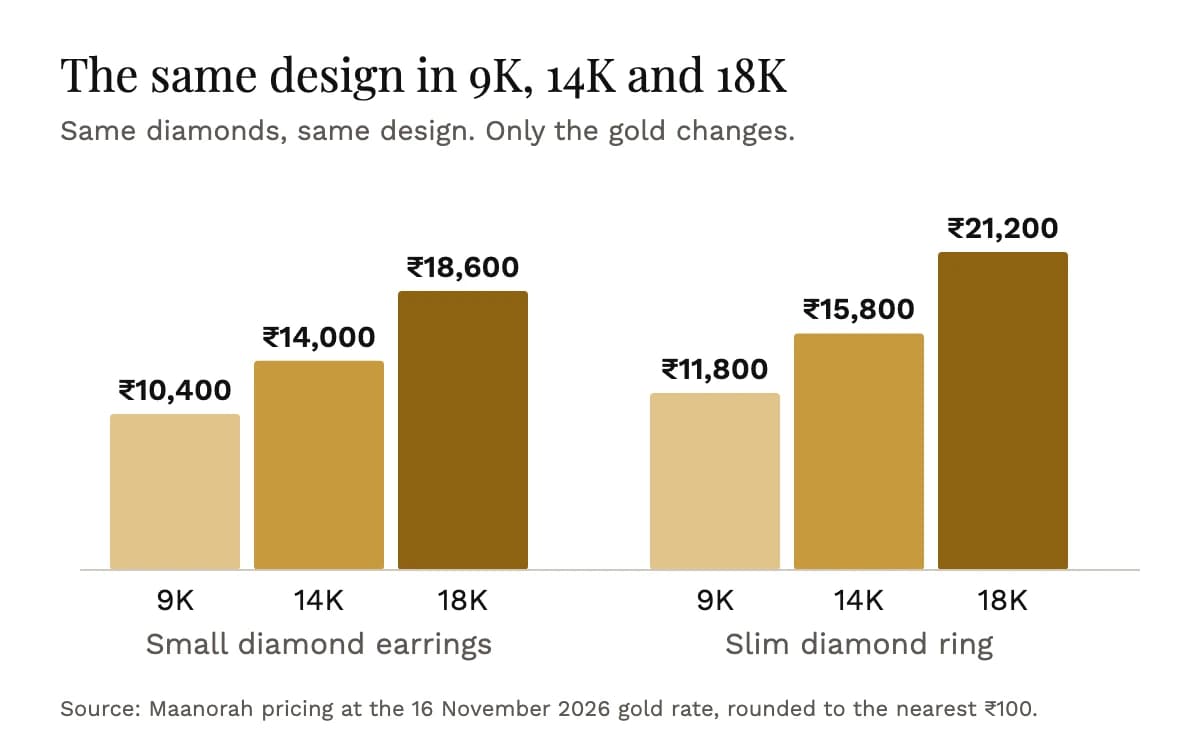
The diamonds and their certificate stay exactly the same. Only the gold changes. So on smaller pieces, choosing 9K or 14K is the easiest way to get the design you love at the price you want. Try it on any product page: the price updates as you switch purity.
Why are lighter, lower-karat pieces so popular now?
Because everyday jewellery has become its own thing. Grand View Research's 2026 jewellery market analysis, citing the World Gold Council and Metals Focus, finds that Indian bridal jewellery is still bought mostly in 22K and 18K, while fashion and everyday pieces lean towards 18K and 14K. It also describes younger buyers choosing lighter, diamond-set pieces they can wear every day.
It makes sense. A wedding set is partly family savings, so high purity suits it. A pair of studs you wear to work every day is about looking good and lasting well, and 14K or 9K does both beautifully.
Which purity for which piece?
- Rings: 14K, or 9K if you work with your hands. Rings take the most knocks, and harder gold keeps prongs and slim bands in shape. Try the Luminous Dawn Diamond Ring in 14K, from about ₹15,800, or the Delicate Dawn Diamond Ring in 9K, from about ₹16,900 with a third of a carat of diamonds.
- Earrings: any purity. They take few knocks, so choose by colour and price. Our earrings guide helps you pick a style.
- Pendants: 14K or 18K. Pendants rarely get scratched, so 18K's colour is a lovely choice.
- Bracelets and bangles: 14K or 9K. Wrists meet desks and doorframes all day.
- A mangalsutra worn daily: 14K for strength, 18K for the colour closest to traditional gold.
Does purity change the colour?
A little, in a nice way. Every purity comes in yellow, rose and white gold.
- Yellow gold looks deeper and richer in 18K, softer in 9K.
- Rose gold looks pinker at lower karats, because it contains more copper.
- White gold has a bright rhodium finish in every purity. With daily wear the finish softens over the years, and any jeweller can refresh it.
How do you keep everyday gold looking new?
Take your jewellery off before swimming, cleaning with chemicals and the gym. Put it on after perfume and lotion. Clean it now and then with warm water, mild soap and a soft brush. That is all it needs, at any purity.
Which is best for sensitive skin?
Higher karats contain less of the other metals, so many people with sensitive skin find 18K the most comfortable. If you have reacted to jewellery before, message us before you order and we will help you choose.
Frequently asked questions
Is 9K gold genuine gold?
Yes. 9K is 37.5% gold and BIS hallmarked as 9K375. It is simply a lower purity, and its gold is credited at the gold rate for its purity in our lifetime exchange.
Is 14K or 18K better for an everyday ring?
14K. It is harder, holds diamonds securely and keeps its shape in daily wear, and it costs less. Choose 18K if you love its deeper colour.
Is 18K gold good for daily wear?
Yes, especially for earrings and pendants. It is a little softer, so it may show fine marks sooner on a ring, but it wears well for years.
Does purity change the diamonds?
No. The diamonds and their IGI or SGL certificate are identical in every purity. Only the gold, its weight and its hallmark change.
On any of our diamond rings, the price updates as you switch purity, so you can compare before you decide.
About Maanorah: we are a family jeweller based in Bengaluru, with more than 60 years and three generations in the trade. Every piece we make uses IGI or SGL certified laboratory-grown diamonds in BIS-hallmarked gold, with a full price breakup, a 7-day return and a lifetime exchange. If you have a question about anything here, message us on WhatsApp. We are happy to help, whether or not you buy from us.