
Why More People Are Choosing Laboratory-Grown Diamonds
Maanorah Team
Ten years ago, most people had never heard of a laboratory-grown diamond. Today they sit in some of the world's best-known jewellery collections, in engagement rings and in everyday earrings, and more people choose them every year.
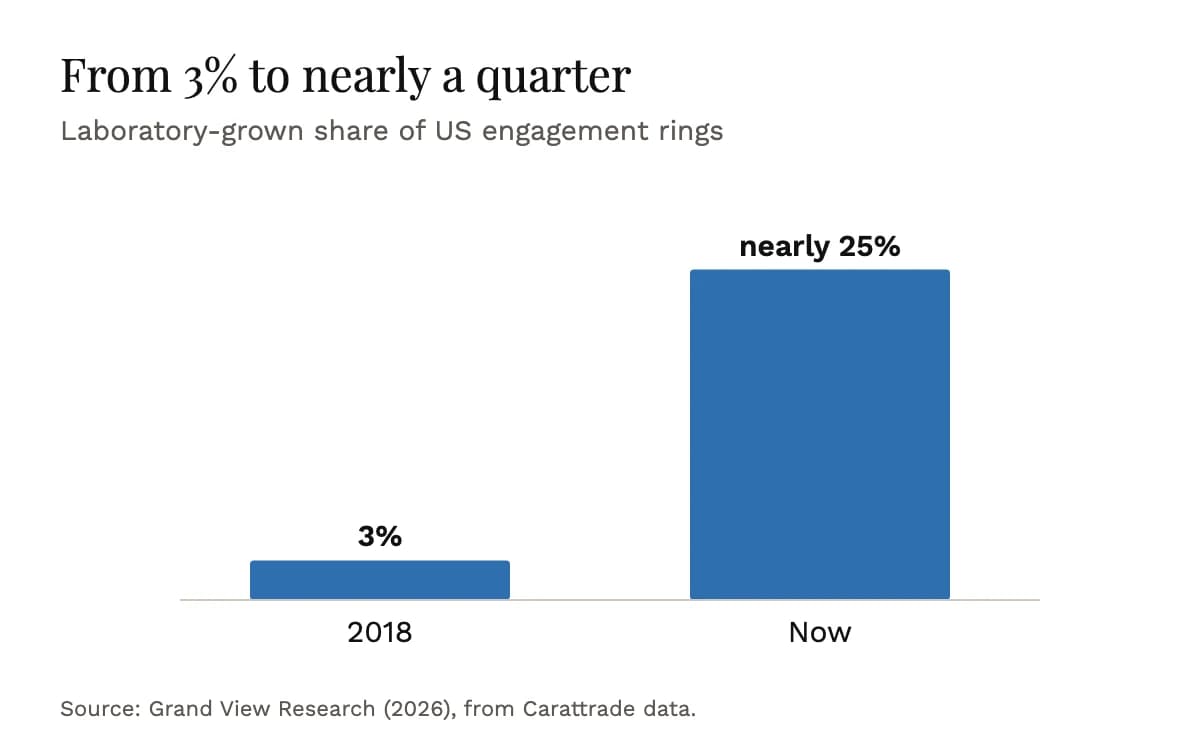
Grand View Research's 2026 jewellery market analysis reports that laboratory-grown diamonds now account for nearly a quarter of engagement rings in the United States, up from just 3% in 2018.
What changed? We hear the reasons every day from the people we make jewellery for. Here are the six we hear most.
1. It is a diamond, through and through
This is the reason that matters most. A laboratory-grown diamond is pure carbon in the same crystal structure as a mined diamond. It is chemically, physically and optically the same, with the same hardness (10 on the Mohs scale), the same brilliance and the same fire. Once set, no one can tell the two apart by eye.
The world's institutions agree. The Gemological Institute of America began grading laboratory-grown diamonds in 2007, and in 2018 the US Federal Trade Commission recognised them as diamonds. Our guide to how laboratory-grown diamonds are made explains the science.
2. Your budget goes much further
Because a laboratory-grown diamond costs far less than a mined diamond of the same size and quality, the same budget buys more. Euromonitor International, citing a North American consumer study by MVEye, found that around one in five buyers chose laboratory-grown so they could get a bigger diamond or save money.
In practice, people use that difference in different ways. Some choose a larger stone. Some choose a better cut or a more intricate design. Many simply buy a second piece, or keep the savings for something else that matters to them.
3. Every stone comes with a certificate
Laboratory-grown diamonds are graded by the same independent laboratories, on the same 4Cs scale of carat, cut, colour and clarity. The report states clearly that the stone is laboratory-grown, and usually records how it was grown. You know exactly what you are buying, and you can check it yourself online. Our certificate guide shows how.
At Maanorah, every piece is certified by IGI or SGL, and every single diamond of 0.30 carat or more has its own grading report.
4. The world's jewellers have embraced them
For years, laboratory-grown diamonds were sold mostly by specialists. Then the big names arrived. In May 2021, Pandora, one of the world's largest jewellery makers, launched its first laboratory-grown diamond collection and moved away from mined diamonds altogether, as MarketLine reported at the time. Euromonitor's February 2025 report lists other well-known names offering them, including Swarovski, and Prada, which set laboratory-grown diamonds in pieces from its Eternal Gold collection.
When jewellers with that much reputation at stake choose laboratory-grown diamonds, it tells shoppers something.
5. They suit the way we wear jewellery now
Jewellery is no longer kept only for weddings and festivals. People want pieces they can wear to work, to dinner and on holiday, every day. A laboratory-grown diamond is as hard as any diamond, so it is made for that life, and it makes everyday diamond jewellery affordable. Our earrings guide is a good place to start.
6. People already trust them
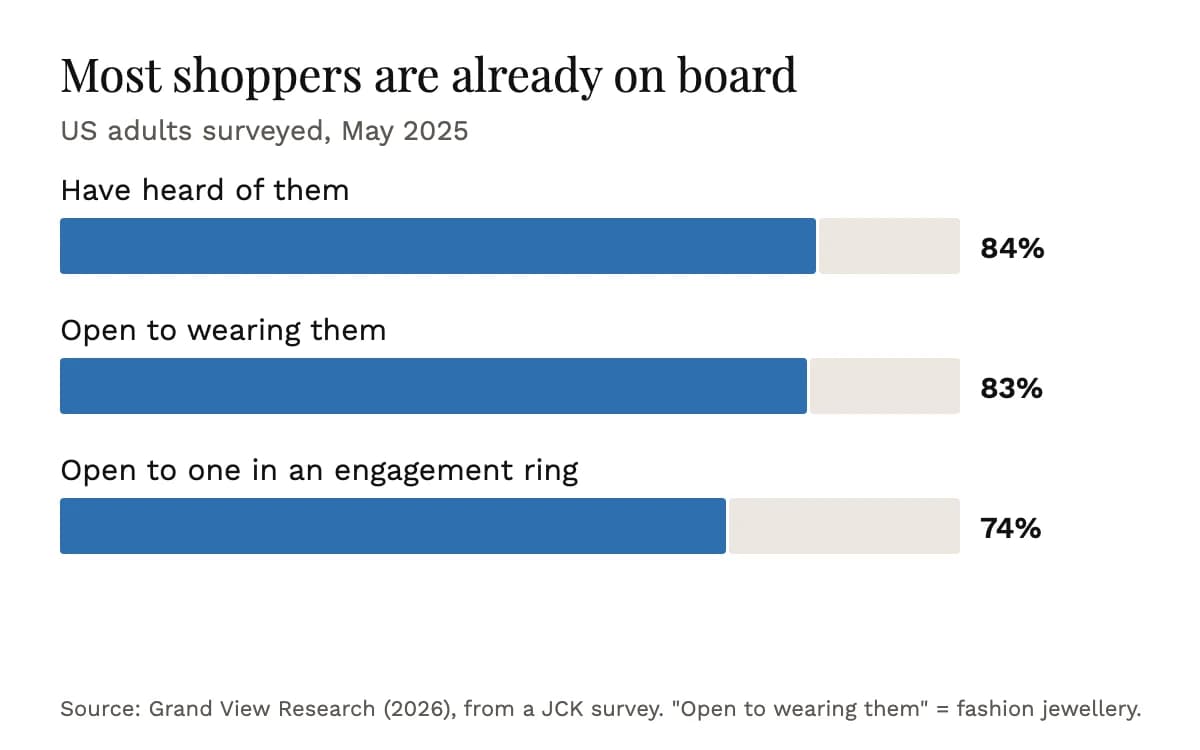
Acceptance is now the norm. In a May 2025 survey reported by JCK and cited by Grand View Research, 84% of US adults had heard of laboratory-grown diamonds, 83% were open to wearing them in fashion jewellery, and 74% were open to one in an engagement ring.
Is a mined diamond ever the better choice?
Sometimes, and it is a perfectly good choice. Some people value a mined diamond for its age and story, or want a piece that matches family heirlooms. We think the right diamond is the one that feels right to you. If you are weighing the two, our comparison of laboratory-grown and mined diamonds sets out the differences honestly.
How do you buy a laboratory-grown diamond with confidence?
- Look for an independent certificate, such as IGI or SGL, and check the report number online.
- Check that the stone is described as laboratory-grown on the product page, the certificate and the invoice.
- Make sure the gold is BIS hallmarked, with a HUID you can check in the BIS CARE app.
- Ask for a price breakup: gold, diamonds, making charge and GST.
- Read the return and exchange terms before you pay.
Frequently asked questions
Will people be able to tell my diamond is laboratory-grown?
Not by looking. Laboratory-grown and mined diamonds look identical, even under a jeweller's loupe. Only specialist laboratory equipment can tell them apart.
Are laboratory-grown diamonds durable enough for daily wear?
Yes. They rate 10 on the Mohs scale, the top of the hardness scale used for gemstones, exactly like mined diamonds.
Are laboratory-grown diamonds certified the same way?
Yes. Independent laboratories such as IGI and SGL grade them on the same 4Cs scale, and the report clearly records that the stone is laboratory-grown.
About Maanorah: we are a family jeweller based in Bengaluru, with more than 60 years and three generations in the trade. Every piece we make uses IGI or SGL certified laboratory-grown diamonds in BIS-hallmarked gold, with a full price breakup, a 7-day return and a lifetime exchange. If you have a question about anything here, message us on WhatsApp. We are happy to help, whether or not you buy from us.