
The Big Shift: How Laboratory-Grown Diamonds Went Mainstream
Maanorah Team
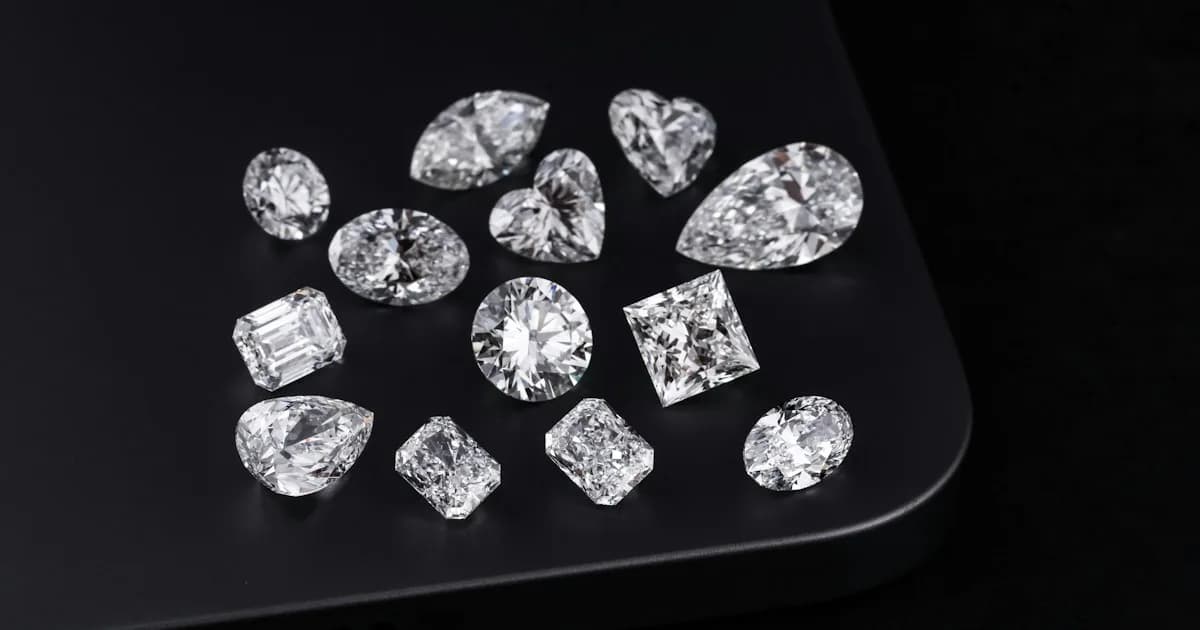
Every so often, a whole industry changes direction. In jewellery, that is happening now. In under a decade, laboratory-grown diamonds have gone from a curiosity to a regular part of how the world buys diamonds.
Here is how it happened, in five chapters, and what it means if you are buying diamond jewellery in India today.
Chapter 1: The science was ready long before the market
The first commercially viable laboratory-grown diamonds were made by General Electric in 1954, for industry. The first gem-quality stone followed in 1971, and the CVD method used for most gem diamonds today emerged in the 1980s, according to Euromonitor International's February 2025 report.
For decades, though, the stones were small and costly to grow. The breakthrough came when growers learned to produce larger, colourless, high-clarity diamonds consistently. By the 2000s, laboratory-grown diamonds were reaching fine jewellery. Our guide to how they are made explains the process.
Chapter 2: The experts gave their approval
Trust in diamonds rests on grading, and grading followed quickly. The Gemological Institute of America began grading laboratory-grown diamonds in 2007. Independent laboratories such as IGI became major graders of them. In 2018 the US Federal Trade Commission recognised laboratory-grown diamonds as diamonds.
That changed the conversation. A laboratory-grown diamond was no longer an alternative to a diamond. It was a diamond, with a certificate to prove its quality, and a clear label to show its origin.
Chapter 3: Shoppers discovered them
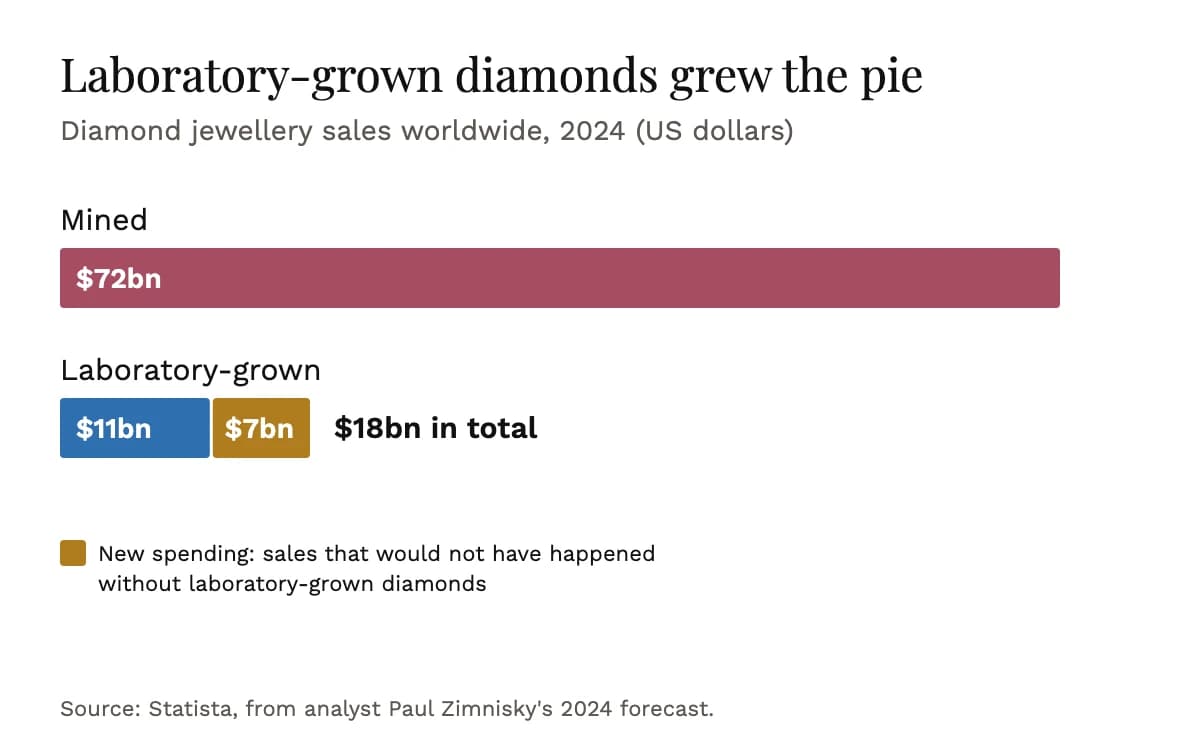
Then demand took off. Euromonitor estimates that laboratory-grown diamond jewellery sales across ten major markets reached almost US$9 billion in 2024, four times their 2019 level. Analyst Paul Zimnisky, in figures compiled by Statista, put worldwide laboratory-grown diamond jewellery sales at about US$18 billion in 2024.
The most interesting part of that number: about US$7 billion of it was new spending, purchases that would not have happened without laboratory-grown diamonds. So laboratory-grown diamonds did not just replace mined diamonds. They brought new people to diamond jewellery.
Chapter 4: The big names joined in
In May 2021, Pandora launched its first laboratory-grown diamond collection and moved away from mined diamonds altogether. MarketLine described it at the time as a move that could set off change across the market, and it did. Euromonitor's 2025 report lists Swarovski, Signet's well-known jewellery chains and Prada among the names now offering laboratory-grown diamonds, alongside a wave of new brands built entirely around them.
Engagement rings, the most traditional diamond purchase of all, show how far things have moved. Grand View Research reports that laboratory-grown diamonds now hold nearly 25% of US engagement rings, up from 3% in 2018.
Chapter 5: One in five diamonds, and rising
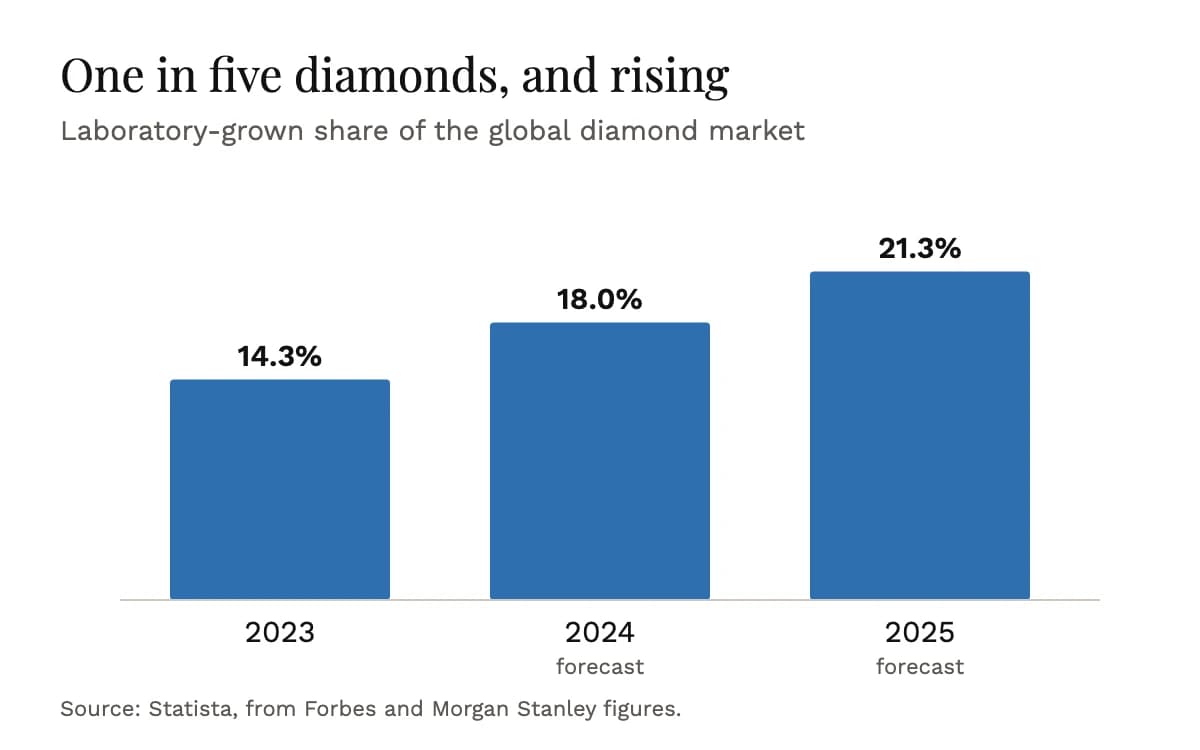
Today laboratory-grown diamonds are a large and growing share of the diamond market. Forbes and Morgan Stanley figures, compiled by Statista, put their share at 14.3% in 2023, with forecasts of 18% in 2024 and over 21% in 2025.
In some countries the shift is already well advanced. Euromonitor estimates that laboratory-grown diamonds made up 26% of diamond jewellery sales in Italy in 2024, 23% in the United States and 21% in Australia.
What about India?
India's chapter is just beginning, and it may be the most exciting one. Laboratory-grown diamonds were about 5% of India's diamond jewellery sales in 2024, by Euromonitor's estimate. Yet India was already the third largest market for laboratory-grown diamond jewellery among the ten it tracked, at about US$452 million, behind only the United States and Canada.
India is also where a great many of these diamonds are grown, cut and polished, and where more online laboratory-grown diamond jewellery brands have started than in any other country. Our article on India's place in the story explores this, and Diamonds, Every Day looks at how Indian jewellery habits are changing.
What does the shift mean for you?
- More choice. Designs that once needed a large budget are now within reach, from everyday earrings to statement pieces.
- More confidence. Laboratory-grown diamonds are graded on the same 4Cs scale by independent laboratories, so quality is clear and checkable.
- More reason to choose your jeweller carefully. With so many new names, look for certificates, a BIS hallmark, a clear price breakup and written return terms. Our guide to what a good jeweller should show you has the full list.
Frequently asked questions
Are laboratory-grown diamonds a passing trend?
The direction of the last decade suggests otherwise. They are graded by the major laboratories, recognised as diamonds by regulators, offered by some of the world's best-known jewellers, and chosen for nearly a quarter of US engagement rings.
Which countries buy the most laboratory-grown diamond jewellery?
The United States is by far the largest market. Euromonitor estimates Canada and India came next among the ten markets it tracked in 2024.
Do laboratory-grown diamonds replace mined diamonds?
Partly, but they have also grown the market. About US$7 billion of 2024's laboratory-grown diamond jewellery sales were new spending, by Paul Zimnisky's estimate, from people who would not otherwise have bought diamond jewellery.
About Maanorah: we are a family jeweller based in Bengaluru, with more than 60 years and three generations in the trade. Every piece we make uses IGI or SGL certified laboratory-grown diamonds in BIS-hallmarked gold, with a full price breakup, a 7-day return and a lifetime exchange. If you have a question about anything here, message us on WhatsApp. We are happy to help, whether or not you buy from us.