
Why India Is at the Heart of the Laboratory-Grown Diamond Story
Maanorah Team
For generations, a great many of the world's diamonds have passed through Indian hands. Cities like Surat and Mumbai built their names on cutting and polishing them. Now the same skills, and the same cities, sit at the centre of the fastest-changing part of the diamond world: laboratory-grown diamonds.
Here is what the latest research says about India's role, and why it matters to anyone buying diamond jewellery here.
India makes and exports laboratory-grown diamonds
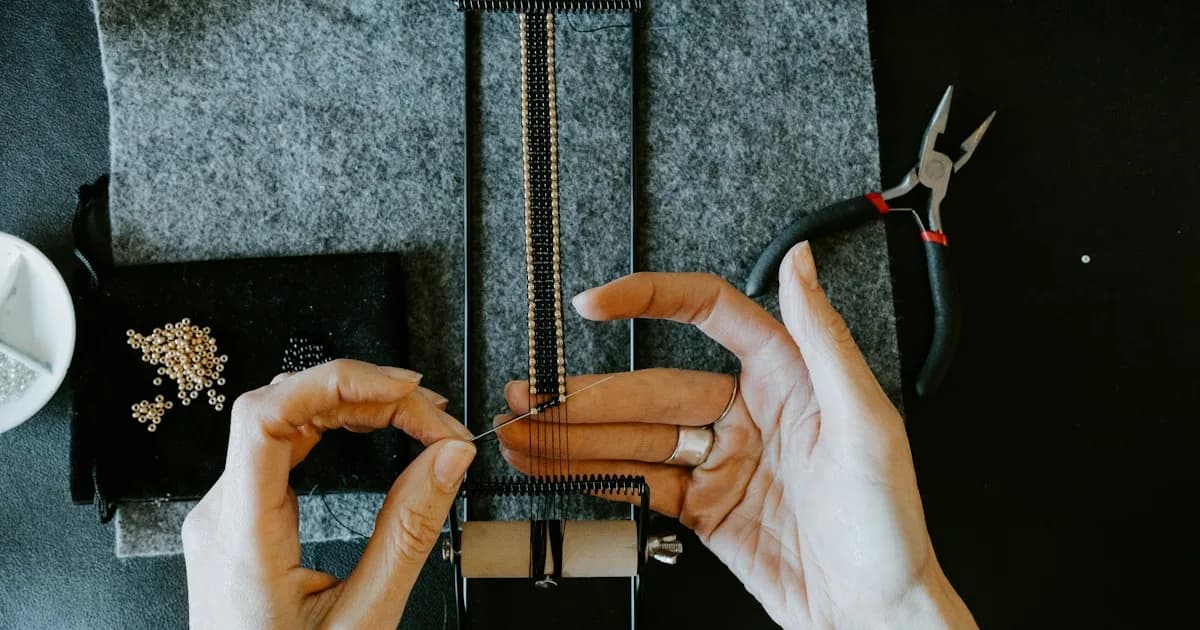
India's diamond craftsmanship did not have to be reinvented for laboratory-grown stones. A laboratory-grown rough crystal is cut and polished exactly as a mined one is, by the same trained hands and the same precise machines.
The exports show the momentum. Grand View Research, citing data from the Gem and Jewellery Export Promotion Council (GJEPC), reports that India's exports of polished laboratory-grown diamonds rose about 27.6% year on year in July 2025, to about US$122.4 million from US$96 million. Euromonitor International's February 2025 report also notes government support for the field, including research grants to institutions such as the Indian Institutes of Technology.
India now has more laboratory-grown jewellery brands than anywhere else
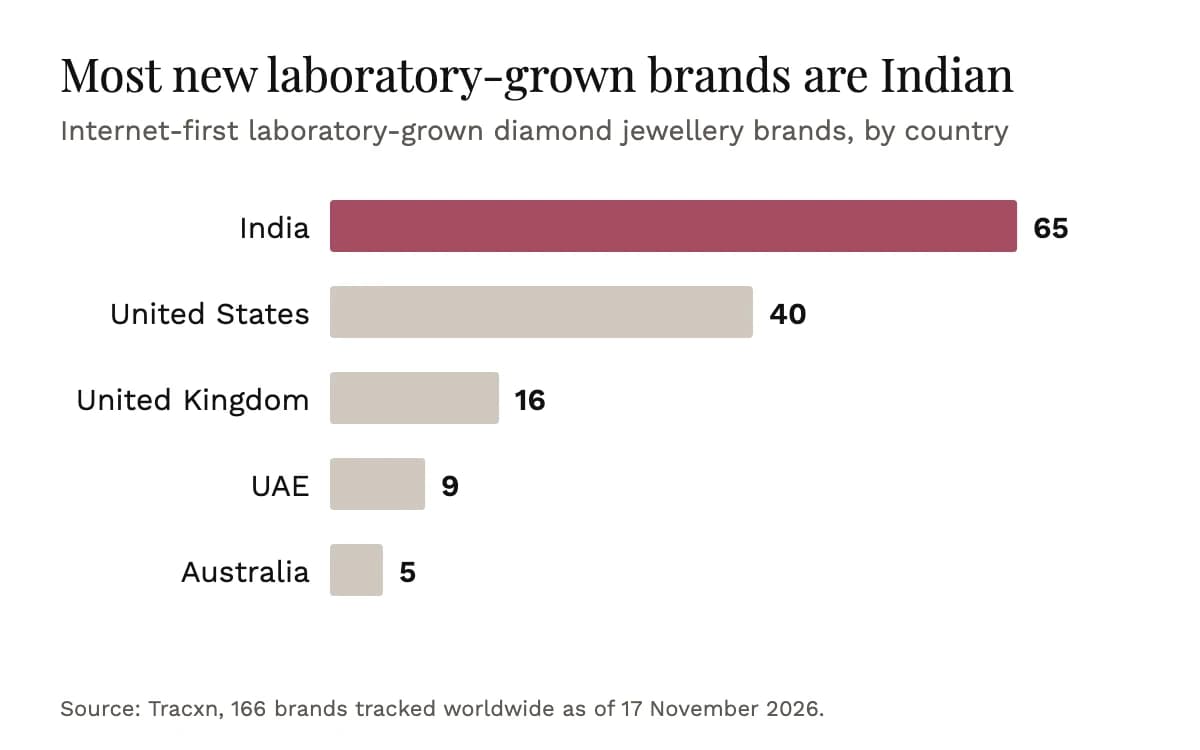
Tracxn, which tracks start-ups, counted 166 internet-first laboratory-grown diamond jewellery brands worldwide in November 2026. India had 65 of them, more than any other country, ahead of the United States with 40. Mumbai and Surat had the most of any city, and Bengaluru, where Maanorah is based, was among the leading cities too.
Euromonitor also notes that some of India's leading jewellery groups are investing in laboratory-grown diamonds. When established names and new brands move in the same direction, it is a strong sign of where the market is heading.
Indian shoppers are choosing them too
India is already the third largest market for laboratory-grown diamond jewellery among the ten Euromonitor tracked, with sales of about US$452 million in 2024, behind only the United States and Canada.
And there is plenty of room to grow. Diamonds made up only about 13% of India's fine jewellery sales in 2024, and laboratory-grown diamonds about 5% of India's diamond jewellery sales, by Euromonitor's estimates. Euromonitor singles out India as one of the most promising markets in the world for laboratory-grown diamonds, thanks to its young population and growing demand for fine jewellery.
Why are Indian buyers drawn to them?
Euromonitor's research points to two reasons that match what we hear from our own customers.
- Affordable luxury. Laboratory-grown diamonds bring diamond jewellery within reach of many people who would not otherwise have bought it, especially younger buyers in cities.
- Weddings, planned wisely. Euromonitor describes Indian families choosing laboratory-grown diamonds for wedding jewellery so more of the budget can go to gold. Our wedding-season guide shows how that works in practice.
Underneath both is a simple fact: a laboratory-grown diamond is chemically, physically and optically the same as a mined diamond, and it is graded on the same 4Cs scale by the same independent laboratories.
How does a diamond become a piece of jewellery?
It passes through several sets of skilled hands, many of them in India.
- Growing. The rough crystal is grown over a few weeks, usually by CVD. Our guide to how laboratory-grown diamonds are made explains the process.
- Cutting and polishing. Specialists plan each stone to get the most sparkle from the crystal, then cut and polish its facets.
- Grading. An independent laboratory such as IGI or SGL grades the stone on the 4Cs and records that it is laboratory-grown.
- Setting. A jeweller sets the diamonds into gold, which is then BIS hallmarked for purity.
At Maanorah, that last stage starts when you order: 7 to 10 days of crafting, 2 to 3 days for certification and hallmarking, then free insured delivery across India.
What does this mean when you buy?
India's leading role is good news for shoppers here. You get the benefit of generations of cutting skill, a wide choice of designs, and certificates from internationally recognised laboratories such as IGI and SGL.
With so many brands to choose from, it pays to buy from a jeweller who shows you everything: a certificate you can check online, a BIS hallmark on the gold, a full price breakup, and written return and exchange terms. Our guide to what a good jeweller should show you walks through each one, and The Big Shift tells the global story.
Frequently asked questions
Does India make laboratory-grown diamonds?
Yes. India grows, cuts, polishes and exports laboratory-grown diamonds. Exports of polished laboratory-grown diamonds grew about 27.6% year on year in July 2025, according to GJEPC data cited by Grand View Research.
How big is India's laboratory-grown diamond jewellery market?
About US$452 million in 2024, by Euromonitor's estimate, the third largest of the ten markets it tracked.
Are laboratory-grown diamonds cut differently from mined diamonds?
No. Once grown, the rough crystal is planned, cut and polished in exactly the same way, to the same standards, and graded on the same 4Cs scale.
About Maanorah: we are a family jeweller based in Bengaluru, with more than 60 years and three generations in the trade. Every piece we make uses IGI or SGL certified laboratory-grown diamonds in BIS-hallmarked gold, with a full price breakup, a 7-day return and a lifetime exchange. If you have a question about anything here, message us on WhatsApp. We are happy to help, whether or not you buy from us.